
Garden waste stays in the garden, not in the skip
An online request, neighbours grouped into one visit, the shredded volume counted: your shredding service, easier to run.
The problem
The biggest stream is often at the recycling centre
In many rural and suburban areas, garden waste fills the skips. The profile checks this against YOUR public figures: from 100 kg of garden waste per resident per year at recycling centres (an adjustable threshold), it puts shredding first, with a target of “10% less garden waste at recycling centres in two years”. This follows ADEME guidance: reduce at source through shredding, mulching and grass-cycling, before any collection.
Step by step
How it works
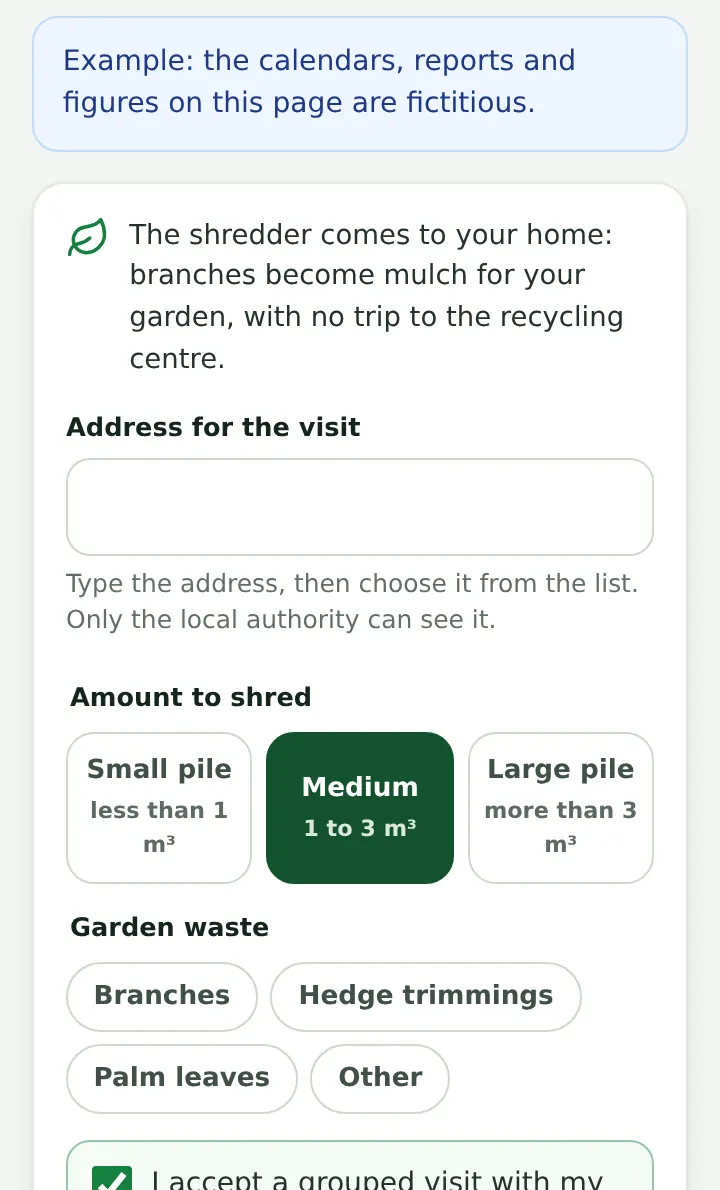
- Residents type their address, choose the volume (small, medium, large pile) and the type of garden waste, and can accept a grouped visit with neighbours.
- You see requests grouped by proximity (“3 households nearby”) and schedule one visit for the whole group; each resident gets an email in their language.
- After the visit, you enter the volume of the branch pile in m³: it becomes kilos shredded (estimated), using a weight per m³ that you set from your own weighings.
- Places where mulch is available appear on the map.
What the tool does not do
It organises a service you already run, or create: it provides no shredder and no staff. Your price is shown as you write it; the tool collects no money. The requester's address is seen only by the local authority and is deleted 12 months after the visit.
Access offered, on your own area
Request access for your local authority
- Open the access page and enter your work email address: it is checked against the official directory of the French administration.
- Enter the code you receive by email: you go straight into your institution's own space, locked to its area.
- Open the waste service there: your municipalities and the tools in service are already set; your recycling centres, the drop-off points mapped on OpenStreetMap and your profile follow shortly, taken from public data. Nothing fictitious: it is your area.
- Each colleague signs in with their own address and joins the same space. Each address is valid for one month; access ends by itself.
Reserved for French public bodies: municipalities, inter-municipal bodies, waste syndicates, departments, regions, public establishments, State services. The access pages and the tool's settings screens are in French. Address not recognised? Write to us.
Demo
Or see the demo first
See right away, without asking for anything, what residents see: the Recyclerie (giveaways), collection days, full bins, the map, shredding. The content is an example, labelled as such on every screen.
For the local authority side (dashboards, settings, article 58 return), sign in with your work email: a code is sent to you and you land directly in the waste service.